How to Create a Token?
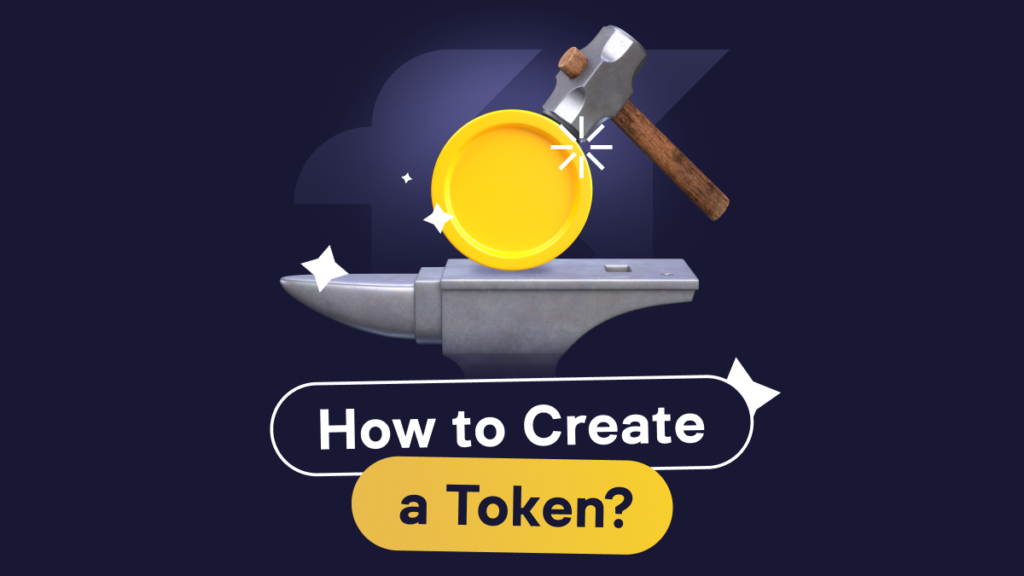
It may seem that all cryptocurrencies are created by large teams of developers with massive capital. In fact, anyone interested in digital currency can now create their own coin. You do not need to build a blockchain or create a cryptocurrency from scratch. It is enough to use the source data of an existing blockchain. In this article, we will show you how to create your own token based on Ethereum, Tron, Waves, Polygon and Cardano.
It’s worth mentioning that we will discuss the creation of a token and not a cryptocurrency. As for the latter, you’ll need a separate blockchain.
Creating a token on Ethereum
In order to launch a token, you need to write a smart contract for it. It is not necessary to create a code from scratch. In the case of Ethereum, you can copy the code of any ERC-20 token from GitHub and change its key parameters. Let’s create our token in the remix.ethereum.org service.
- Create a file called “new token”.
- Paste the copied smart contract code.
- In the constructor menu, change the key parameters: the amount of cryptocurrency, the decimal precision, the name of the token, the ticker, as well as its functionality.
- Check the code for errors by clicking “Compile new token”.
- Click “Deploy” to launch the token. To do this, install a crypto wallet, such as MetaMask.
- Connect the wallet and pay the fee in ETH.
That’s it, your ERC-20 token is ready to enter the crypto world!
Creating a token on Tron
Tron is a platform for creating smart contracts, similar in functionality to Ethereum. It is possible to create TRC-10 and TRC-20 type tokens on this network. To create a token on this network, you must first download the TronLink wallet.
- Download TronLink wallet in the Google Chrome extension.
- Go to tronscan.org and connect your wallet.
- In the “Record token” tab, select the creation of a TRC-20 token.
- Upload the smart contract address from GitHub to TronScan and compile it.
- Fill in the key data: name, amount of cryptocurrency, functionality, etc.
There you go! The TRC-20 standard token has been launched.
Creating a token on Waves
One of the easiest ways to create a token is to use the Waves blockchain.
- Sign up or log into your account on the Waves exchange platform.
- Click on a “Create asset” button and fill out all necessary fields: the name, the ticker, precision, and so on.
That’s it! Your token will be deployed after you pay the launch fee that constitutes 1 WAVES which equals around $25 at the moment of writing.
Create a token on Polygon
Polygon is a platform for building Ethereum compatible blockchains. The developers aim to increase the scalability of Ethereum and reduce transaction costs. Let’s discuss how to create a token on Polygon without deep programming knowledge.
- Go to Remix, an integrated service for creating products on Ethereum, and click on “Contracts” to create your smart contract.
- Go to OpenZeppelin and select a contract template, click “Share” next to the selected template and paste the copied code into your Remix smart contract.
- Create a smart contract for your token. To do this, go to OpenZeppelin, copy the top line of the code and paste it above your import file. Next, copy and paste the rest of the code template from OpenZeppelin below the import line. Specify the name and the ticker of your token in the constructor.
- Check the code for correctness by clicking “Compile”.
- Launch the token into the Polygon network by clicking “Deploy”.
Done, your token is on Polygon now!
Create a token on Cardano
The Cardano blockchain is also compared to the popular Ethereum, and its ADA cryptocurrency is consistently ranked among the most successful cryptocurrencies by capitalization. Here’s how to create and launch your own token on this popular network.
- To create native tokens using the Cardano CLI, you need to set up and run a Cardano node.
- Set up a relay node to connect to the native token testing environment.
- Start interacting with the Cardano network.
- Set up a monetary policy script.
- Create a token using the monetary policy.
Please note that creating tokens using the Cardano CLI requires prior experience with a Cardano node.
Conclusion
We hope we managed to prove that a cryptocurrency can be created over a cup of tea. However, before getting down to create your own asset, think about its purpose and ways of promotion because the creation of a token is only the beginning of your crypto project story 😉