How to Identify and Avoid Crypto Scams
Many people view cryptocurrency as a scam, but is that truly the case?
Every day, more individuals are exploring the world of cryptocurrencies, and as interest grows, so does the prevalence of fraudulent schemes. No matter how seasoned a trader may be, cryptocurrency scams are always a risk. In this article, we’ll examine the most common types of blockchain fraud and offer practical advice on how to safeguard your assets.

Choose WhiteBIT Australia for Reliable and Secure Cryptocurrency Trading
What is a Cryptocurrency Scam?
A cryptocurrency scam refers to any fraudulent activity involving digital assets, where attackers employ a range of tactics to deceive users and steal their money or personal information. While these scams can take many forms, their primary objective remains the same: to exploit the trust of market participants for financial gain.
Why Bitcoin Scams Are So Common and How They Impact the Market?
Bitcoin scams are becoming more prevalent, largely due to the anonymity and decentralized nature of blockchain technology. These characteristics make the market an appealing target for fraudsters, who can conceal their actions and evade traditional oversight. Additionally, the surge in cryptocurrency interest combined with the inexperience of many newcomers creates a perfect environment for scams to thrive. Eager to make quick profits, many users fail to properly vet projects, which scammers exploit to their advantage.
Cryptocurrency scams have a serious impact on the market, eroding trust in digital assets and contributing to volatility. Each instance of Bitcoin fraud sparks panic, often triggering short-term price drops and increasing risks for buyers. These scams also pose a challenge to regulators, as it is difficult to create effective safeguards and enhance market security when faced with such deceptive tactics.
Types of Crypto Fraud
There are several types of cryptocurrency scam commonly used by fraudsters. Let’s explore the main ones:
- Fake ICOs (Initial Coin Offerings). Fraudsters create bogus offers to sell tokens, promising buyers high returns. They use enticing websites and irresistible offers to attract funds, only to disappear without ever launching the project.
- Ponzi Schemes. In Ponzi schemes, extraordinary returns are promised, but payments to earlier buyers are funded by new purchases. When the flow of new participants slows, the scheme collapses, leaving many buyers with significant losses.
- Fake Exchanges and Crypto Platforms. Fraudsters can set up counterfeit cryptocurrency exchange platforms where users deposit funds. These platforms may operate for a few days or weeks before vanishing with the funds.
- Phishing. Malicious actors create fake websites that mimic legitimate cryptocurrency platforms or wallets. They trick users into providing personal information, private keys, or passwords, giving fraudsters access to their funds.
- Pump and Dump. These schemes involve manipulating token prices. Fraudsters artificially inflate the price of a token (through fake news or large purchases) and then sell their assets at the inflated price, leaving other buyers with losses.
- Drainers. Wallet draining involves attackers exploiting vulnerabilities in cryptocurrency apps or services to illegally withdraw funds from other users’ wallets. Typically, fraudsters gain access via phishing, malware, or social engineering, then transfer the stolen funds to their own wallets, effectively “draining” the victim’s account. This is one of the most common forms of cryptocurrency fraud.
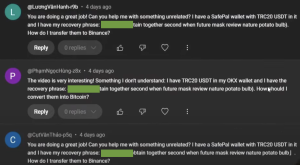
- Seed phrase blockchain scams. You’ve likely seen comments on YouTube or other social media platforms where users “accidentally” share their seed phrases, pretending to be beginners:
Source: https://www.youtube.com/
This is a bait aimed at dishonest cryptocurrency users. Scammers post such comments using bots on various platforms. An unsuspecting user opens the wallet and finds a significant USDT balance, usually on the TRON network. However, in order to withdraw the funds, they must pay a transaction fee in TRX. As soon as the user transfers the TRX, it is instantly sent to the scammer’s wallet.
The decoy wallet is set up as a Multisig wallet, which requires the consent of several people to authorize a transaction. Therefore, even after paying the “commission,” it is impossible to transfer USDT to your wallet. If you look at the transaction history of such a wallet, you can see hundreds of TRX deposits and withdrawals “for commission.”
- Airdrops and Bounty Programs. In some cases, crypto scammers promise free tokens through airdrops or bounty programs, but to get them, they require you to transfer funds or provide personal information, which they then use to steal money or data.
Key Indicators of a Crypto Scam: How to Spot a Bitcoin Scammer
Here are the main red flags to watch for when identifying potential cryptocurrency scams:
- Unrealistic Profit Promises. Claims of high returns with little to no risk are a classic sign of fraud.
- Inability to Verify. A lack of transparency and the absence of verification or proof of the project’s legitimacy are major warning signs.
- Problems with Withdrawing Funds. If you encounter issues or unexplained delays when trying to withdraw your funds, it’s likely a scam.
- Too-Good-to-Be-True Offers. Be cautious of excessive bonuses or tempting offers that pressure you to act immediately.
- Unregulated Platforms. Using unverified or unlicensed exchanges and wallets is a common tactic used by scammers.
- Requests for Seed Phrases. Never share your private information or seed phrases—legitimate platforms will never ask for this.
- Phishing Sites and Fake Projects. Fraudsters often create duplicate sites that mimic reputable platforms to steal your personal data.
- Lack of Customer Support and Reviews. A lack of responsive support, along with negative or fake reviews, is a strong indicator of a scam.
How to Protect Yourself from Bitcoin Fraud?
To stay safe in the cryptocurrency space, it’s essential to remain vigilant and follow a few simple but effective security practices:
Use Two-factor authentication (2FA)
Enabling two-factor authentication (2FA) adds an extra layer of security to your accounts. Even if attackers manage to get hold of your password, they won’t be able to access your wallet or account without the second factor—such as a code sent to your phone or app. Make sure to enable 2FA on all your platforms and wallets to protect your funds from unauthorized access.
Verify Your Sources
Always verify your sources when dealing with cryptocurrencies. Be cautious of random messages, comments, or links, particularly from unknown or unreliable sources. Fraudsters often create fake websites and social media accounts to deceive users. Always double-check the authenticity of information and research a project’s reputation before making any purchase.
Use Trusted Wallets and Exchanges
To avoid scams, choose only verified and secure crypto wallets and exchanges with a solid reputation. For example, WhiteBIT Australia crypto exchange is a reputable exchange that prioritizes security, using cold wallets for fund storage and offering two-factor authentication. Adhering to open security standards minimizes the risk of data breaches and asset loss. Before entrusting your funds to any platform, take the time to read reviews and consider other users’ experiences.

Check Licenses and Project Reputation
Before buying any cryptocurrency project, it’s crucial to verify its license and reputation. Legitimate projects will always provide clear documentation and transparency about their operations.
Research the development team and check reviews on independent forums and within crypto communities. If a project lacks proper licensing or has a questionable reputation, it could be a fraudulent scheme. Always conduct thorough due diligence before committing your funds.
What to Do If You’ve Been Scammed?
If you’ve fallen victim to a cryptocurrency scam and are wondering, “is crypto a scam?”, the first step is to stay calm and avoid panicking. Start by documenting all evidence related to the fraud, such as transaction details, screenshots, communications with the fraudsters, and information about the platform or project involved. This information will be valuable when filing a complaint or contacting law enforcement.
How to Recover and Report a Cryptocurrency Scam to Authorities?
Recovering funds after a cryptocurrency scam can be challenging due to the anonymity of blockchain transactions. However, crypto scam recovery is possible if you take the right steps. It is crucial to report crypto scams to law enforcement agencies, as it will aid in the investigation. Be sure to provide all available evidence and details about the fraudsters. Report the scam to ScamWatch
Additionally, reach out to the platforms or services through which the funds were transferred and inquire if they can assist in blocking the fraudulent wallets or recovering the funds. In some cases, if the blockchain scammers used common tactics, they may be identified during the investigation.
Real-Life Examples of the Biggest Crypto Scams and Their Unmasking
One of the most significant scandals in the cryptocurrency world in recent years was the FTX exchange scam. The company’s founder, Sam Bankman-Fried, was arrested after it was uncovered that he had orchestrated a Ponzi scheme, using users’ funds for personal expenses and speculative trading. Users lost billions, and the exposure of the fraud caught the attention of global financial regulators. Investigations revealed that FTX’s management had manipulated data and failed to meet its obligations to customers, leading to the exchange’s eventual bankruptcy. This case marked a turning point in the cryptocurrency industry, underscoring the need for greater transparency and regulatory oversight.
Another big crypto scam was the PlusToken scam, where millions of users were defrauded with promises of high returns on cryptocurrency purchases. The scammers were apprehended, and some of the stolen funds were returned to the victims through legal proceedings.
Trade Bitcoin on WhiteBIT Australia — stay ahead in the crypto game!
Conclusion
Each year, the cryptocurrency market draws more buyers, which in turn attracts more scammers. To reduce the risk of losing funds, it’s crucial to stay informed and cautious. Only use verified services, avoid trusting unverified offers, and stay updated on the latest security trends.